One Day - Day One
AGAINST PLASTIC
Overview
We ALL leave our fingerprints behind, and we somehow pollute our planet every day with something or other. This „big problem“ of humanity can hardly be overlooked anymore.
It only works in small steps, with education and with great consistency in daily life, in both small and big things. Doing a proper clean-up once and then everything is fine again doesn't work with Mother Earth. We should all think about this and perhaps also motivate a good friend, acquaintance or our own partner to avoid plastic items, to just pick them up and take them with them, and much more. There are many areas when it comes to avoiding plastic and environmental pollution where every one of us can do something.
Join in, spread the word and just give it a go! ONE DAY, and it's best to start with DAY ONE against plastic right now.
We regularly organise Clean Up Tours in the Red Sea together with our guests. Why not join us next time?
We want to do something for the environment
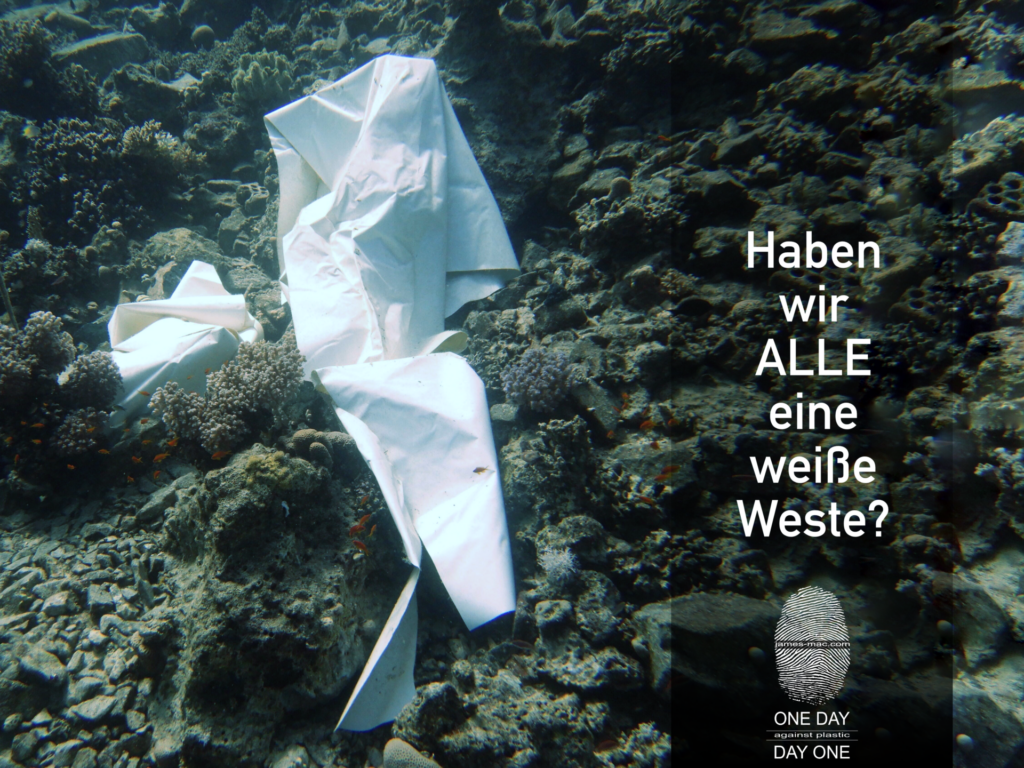
Are our hands entirely clean?
Who can honestly say they have a completely clean slate when it comes to pollution? But we can all do something together to make our home planet cleaner again. That is why environmental protection concerns us all!
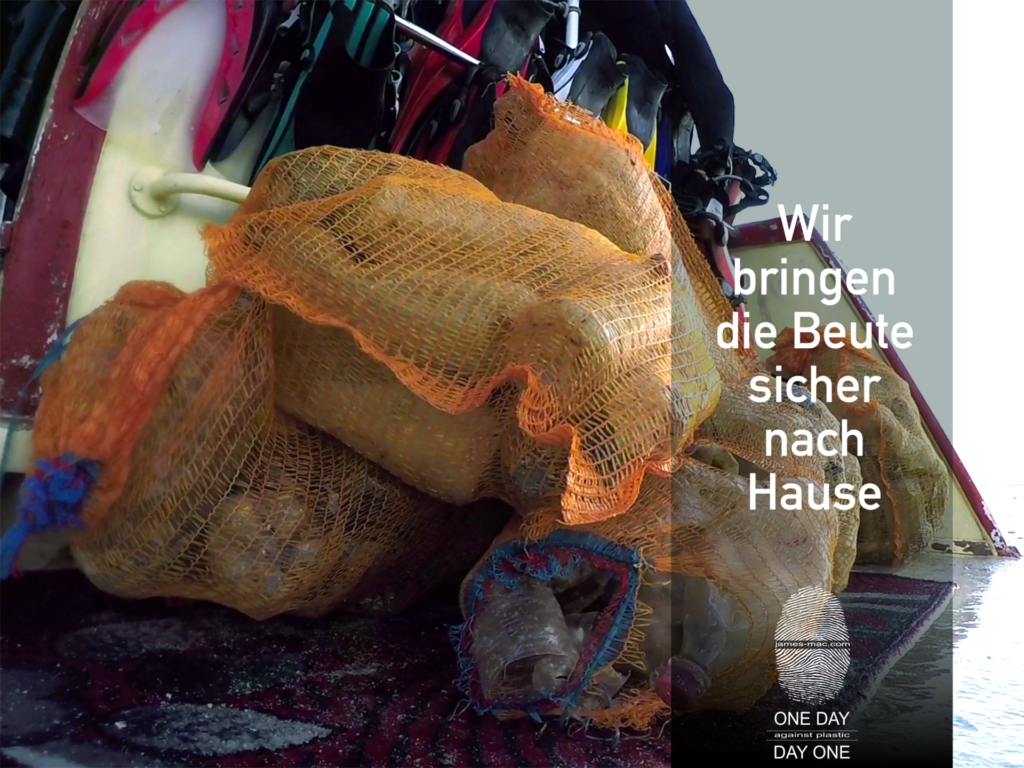
We are bringing the loot safely home
At this point we say a big thank you to our environmentalists! Without our guests taking part in our clean-up campaigns, we wouldn't haul in such a massive catch.
Many thanks for your commitment to the Red Sea and the environment, your team from James & Mac Diving Center and from the Blue Water Dive Resort team.
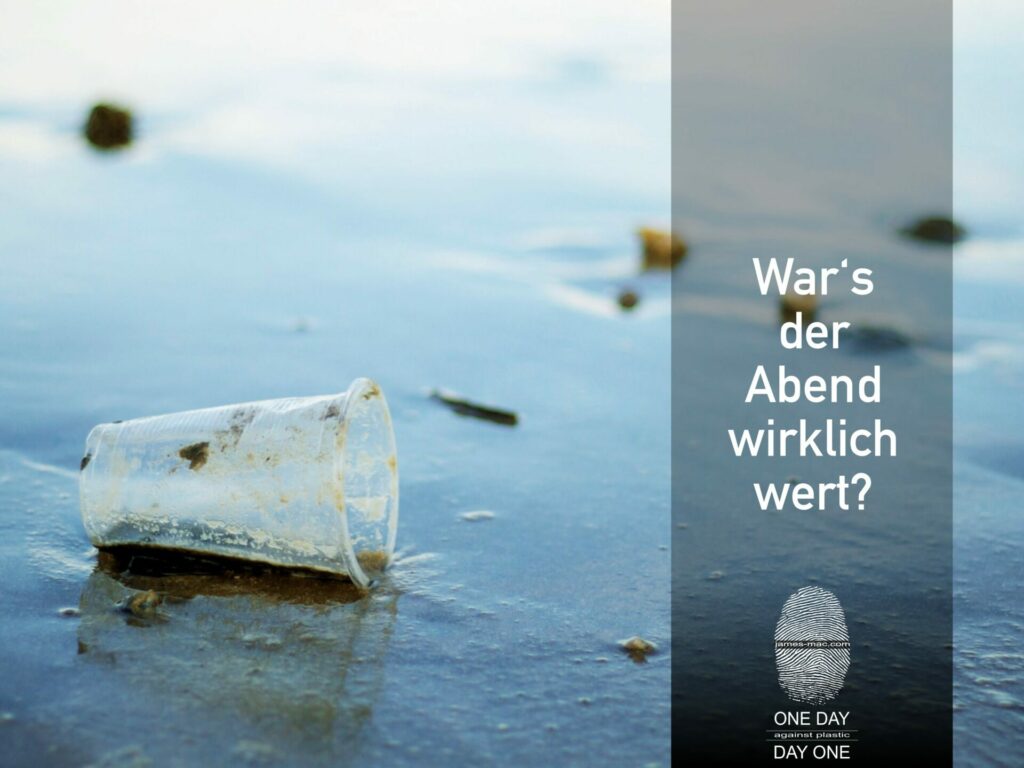
Was the evening really worth it?
„The Last Party for the Sea“ – we must all do our bit to stop things getting to that stage. Plastic is one of the biggest problems facing the sea, and at the same time, it’s one that we can all help to prevent. How? It’s quite simple:
Use less plastic! None of us is perfect, but we can all help to stem the tide of plastic in the ocean. Single-use cups, like the one shown here, should definitely no longer be used. The same applies, of course, to plastic tableware, plastic cutlery and plastic bags.
Even tiny microplastics often come from the land. Among other things, microplastics are used in many cosmetic products. Sewage treatment plants are unable to filter out these fine plastic particles. This is how they find their way into our waterways and eventually into the sea. Tiny plastic fibres also enter the water when washing synthetic textiles. Anyone who wants to find out which cosmetics contain microplastics can find a shopping guide published by BUND.
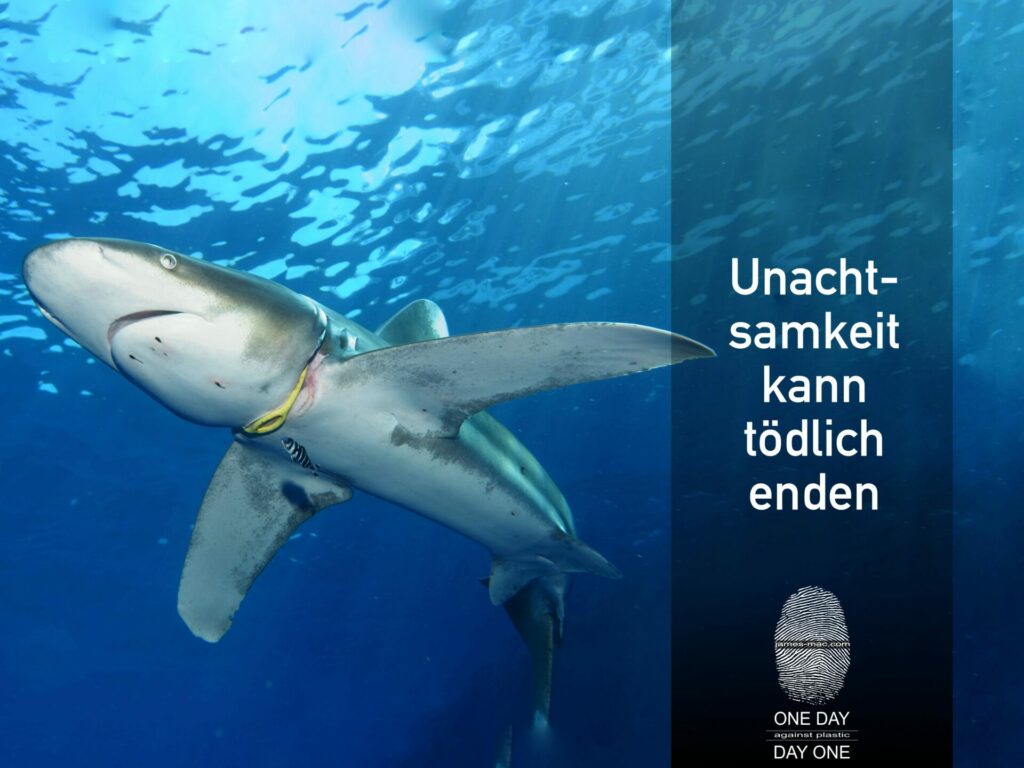
Carelessness can prove fatal
What a sad sight: a piece of diving equipment has become entangled around this shark's body. The octopus holder has already cut deep into the shark's skin. It is very likely that this king of the sea will perish from this, or unfortunately already has. That's hardly great.
There are many types of plastic that not only pollute the seas, but can also become a deadly trap for marine life. Bottle and can holders (so-called six-pack rings) are among them, as are plastic bags, which are mistaken for jellyfish by turtles.
Therefore, please be careful and secure your diving equipment carefully!
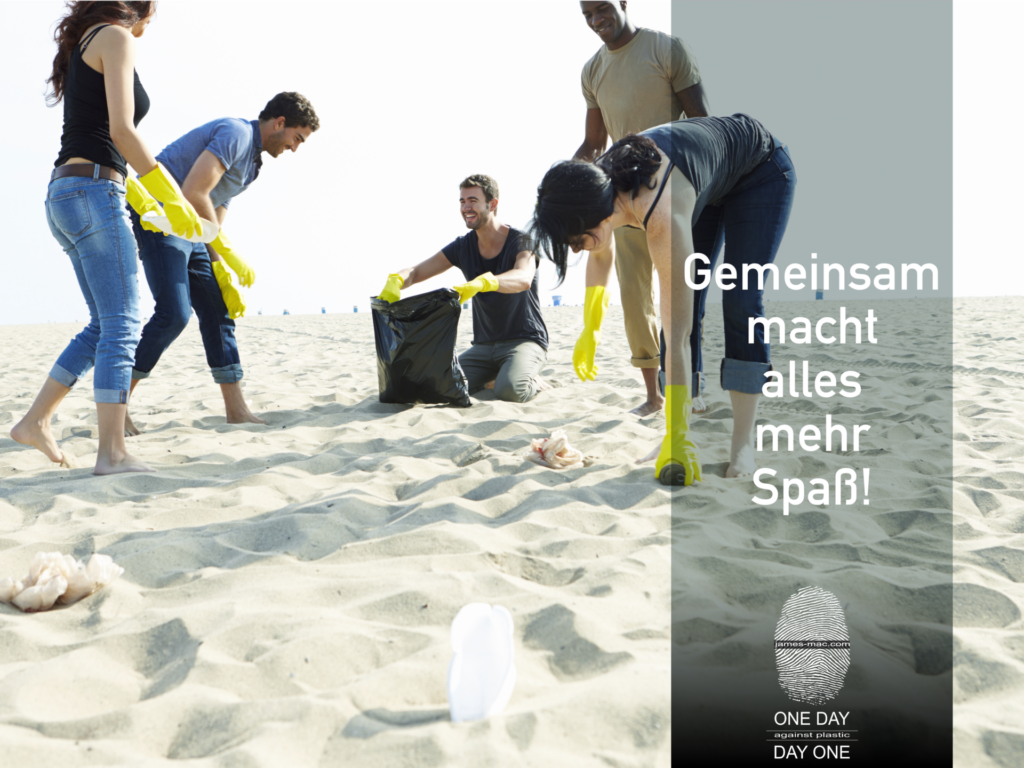
Everything is more fun together!
Now that is a title: Saviour of the world! Wow … and the good thing is, we can all become one or perhaps already are. The prerequisites for this are very simple. You need a sense for the environment, an eye for litter and ideally a bin bag as well. Then you can crack on with „saving the world“.
According to statistics from the Federal Environment Agency for 2018, 51 % of the population said they could envisage getting involved in environmental and nature conservation. That’s great news! In reality, however, only 12 % were actually involved in environmental issues. So there’s still room for improvement!
One small step, for example, is to take part in one of our clean-up dives. But you can also get organised at home and turn your neighbours into world saviours too. I’m sure there’s a patch of woodland or a meadow near you that’s just waiting to be saved by you.
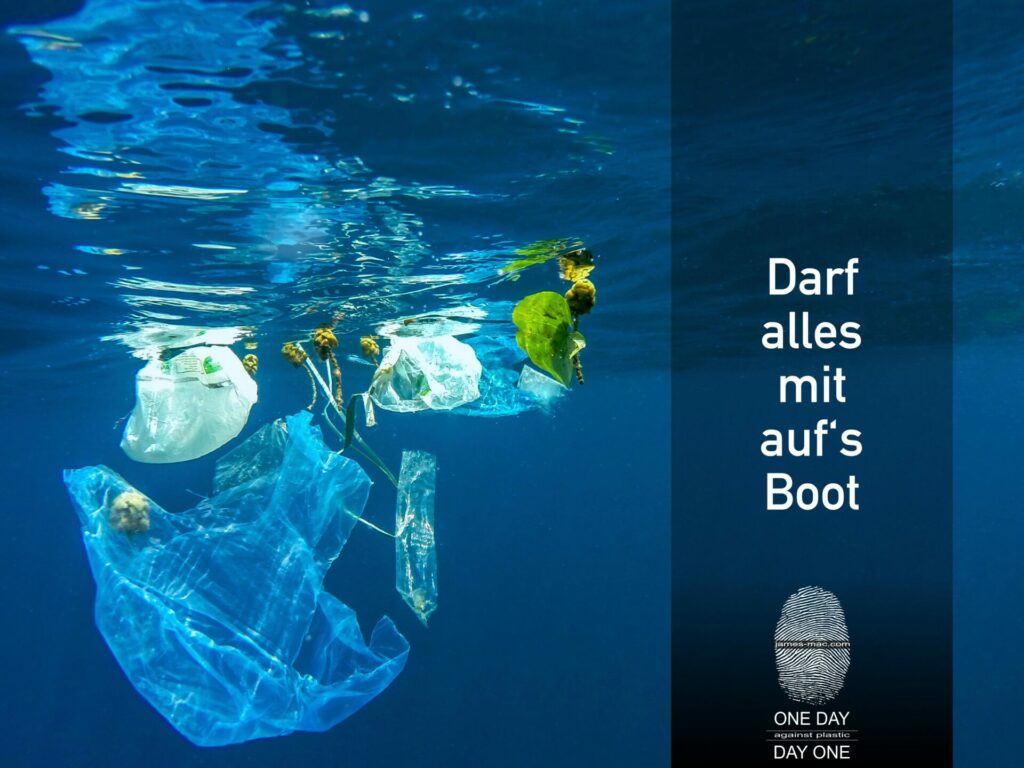
Can everything come on the boat
Most people have already heard of the giant garbage patches floating in the world's oceans. But which one is actually the largest garbage patch?
It is believed that there are five (!) large garbage patches in the ocean. These gigantic garbage patches (often called plastic islands) are located near the equator. Here, the northern and southern ocean currents meet. Inside these gigantic water vortices are the traces of our civilisation: fishing nets, flip-flops, bottles, bags, toys and much more. But which one is actually the largest garbage patch?
The largest garbage patch is the Great Pacific Garbage Patch. It is estimated to be around 1.6 million square kilometres in size. (Source: Scientific Reports: Lebreton et al., 2018). Germany would fit inside it four times over!
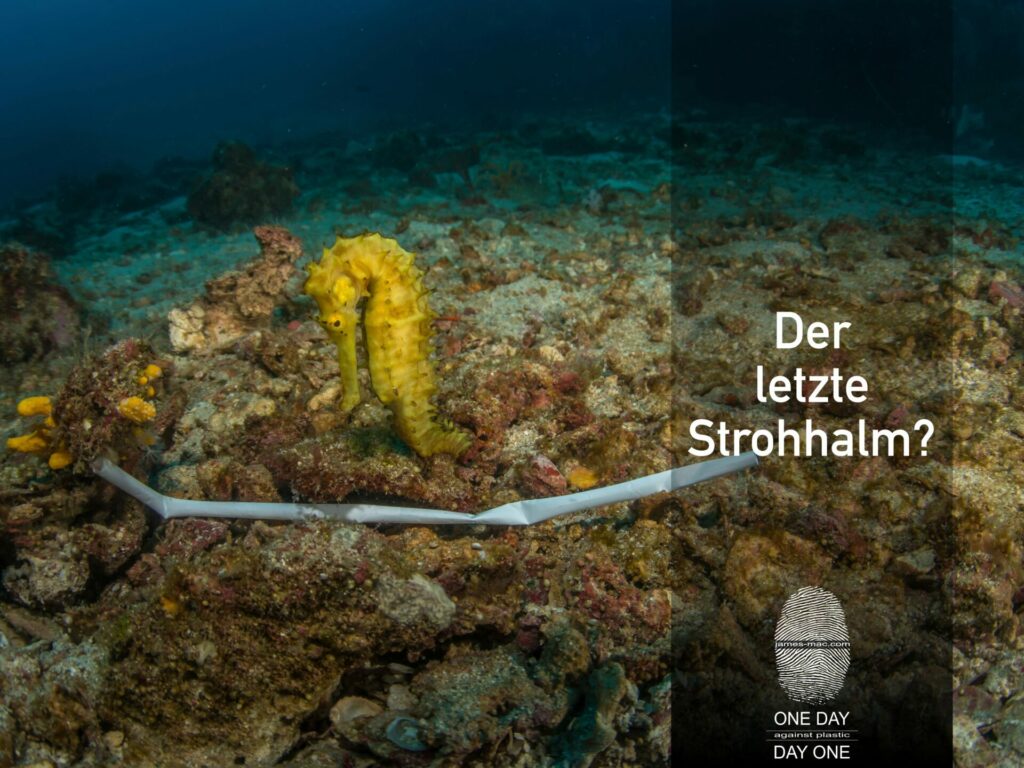
The last straw?
Plastic drinking straws are completely unnecessary! When you think about how long a drinking straw is actually used for and how long it continues to exist as rubbish, it’s enough to make your head spin. It’s exactly as the saying goes: one sip – then straight into the bin! Plastic straws are single-use items and pollute the environment billions of times over every day.
What can be done?
First of all, do without them. For most drinks, we don't need a plastic straw at all – often they are just colourful decoration. If a straw is an absolute must, the plastic ones should be replaced. Ideally, of course, with ones made from reusable materials such as metal or bamboo.
At your next restaurant or bar visit, ask the waiter not to use a plastic straw. If other guests notice, perhaps they will also go without this completely unnecessary straw.
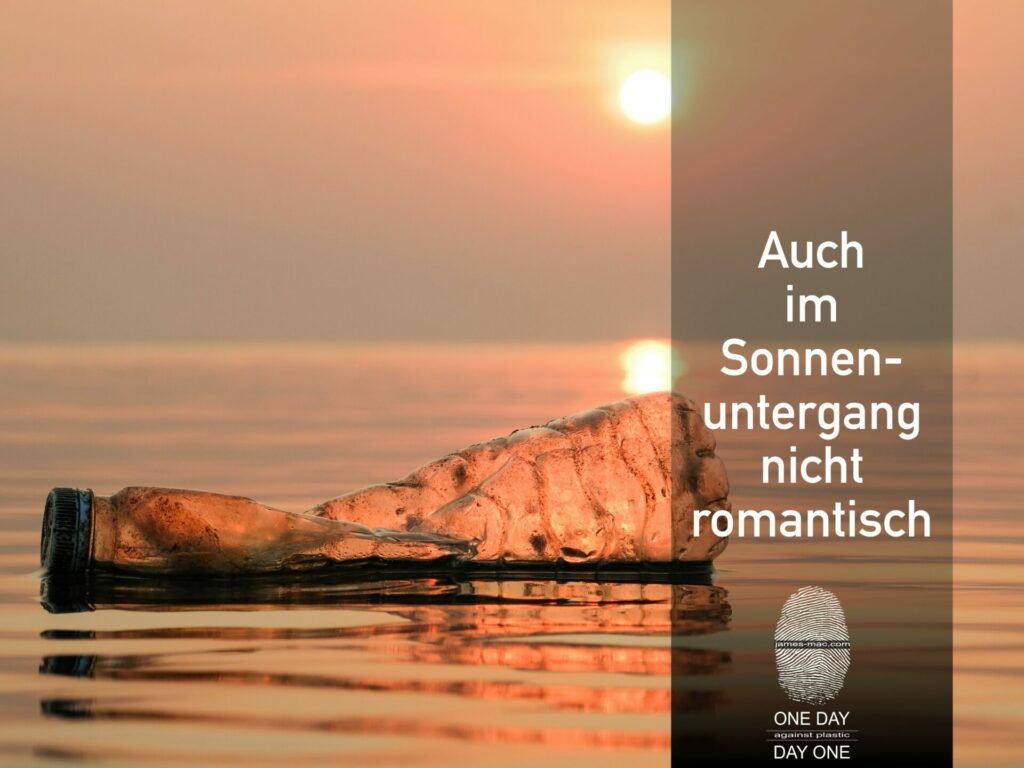
Not even romantic at sunset
Plastic waste in the sea is a major problem for the marine environment. But researchers have now discovered yet another problem caused by plastic waste in the sea: the plastic in the water produces the greenhouse gas methane! Scientists at the University of Hawaii originally wanted to find out how much methane gas escapes from seawater. Normally this is a natural process originating from living organisms in the water. However, the measured values were much too high. The researchers came up with the idea that the high values were caused by the plastic bottles in which the water samples were kept.
Afterwards, they submerged various types of plastic in water and exposed them to sunlight. All the samples produced the greenhouse gases methane and ethylene. One type of plastic emitted particularly high amounts: polyethylene. This plastic is contained in many carrier bags and other disposable products. Although it is suspected that the emission of methane from plastic is quite low compared to other sources, climate researchers consider it important to investigate the emissions of plastic waste further.
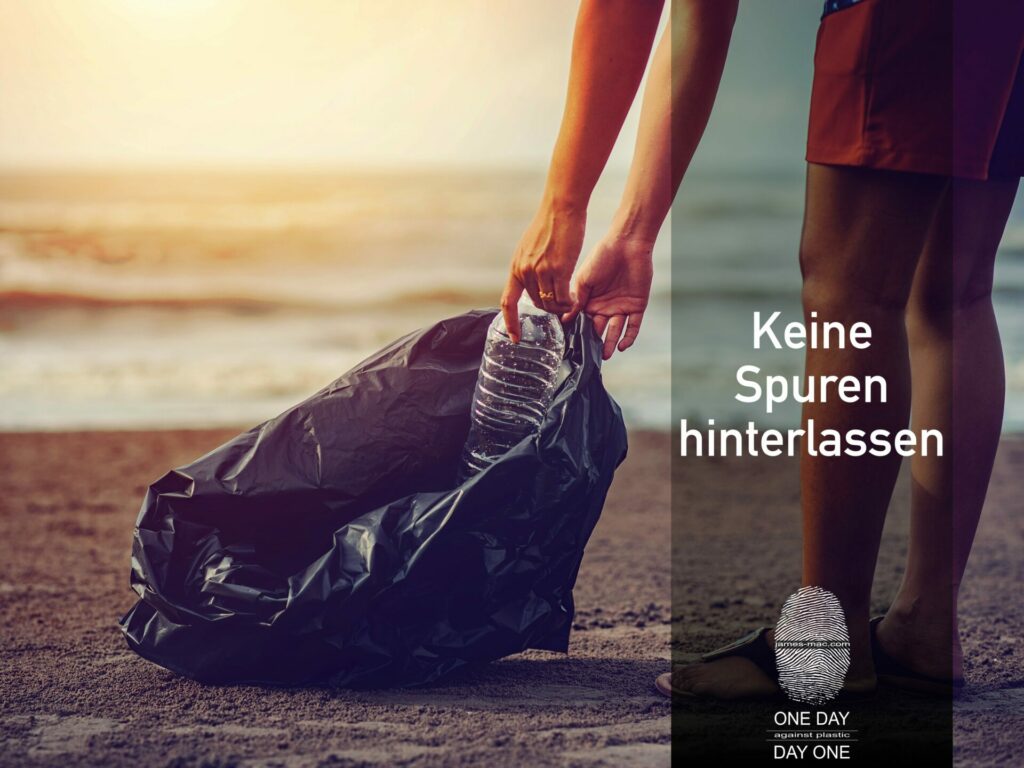
Leave no trace
Our understanding of the environment should be shaped by this thought: leave as little trace as possible! Although there is now scarcely a place in the world where the traces of our civilisation cannot be found, we should keep our ecological footprint as small as possible.
Of course, this also includes taking your own rubbish with you, for example from the beach. However, other people's rubbish can be taken along too – after all, the environment doesn't care who left the traces.
We must all take responsibility for that
It's a well-known proverb: every journey begins with the first step! That is also, and above all, true for environmental protection. After all, we are responsible for the current state of the Earth, we all have to face up to that.
Perhaps you know that feeling of powerlessness that arises in the face of ecological challenges. True to the motto: „What can I possibly achieve?“ But just imagine the exact opposite, with the majority saying: „We can achieve something!“
Even though the step towards environmental protection is just a small one for each of us, it can become a great movement if everyone joins in. If each of us picks up a piece of litter every day, the first step towards a cleaner world has been taken.
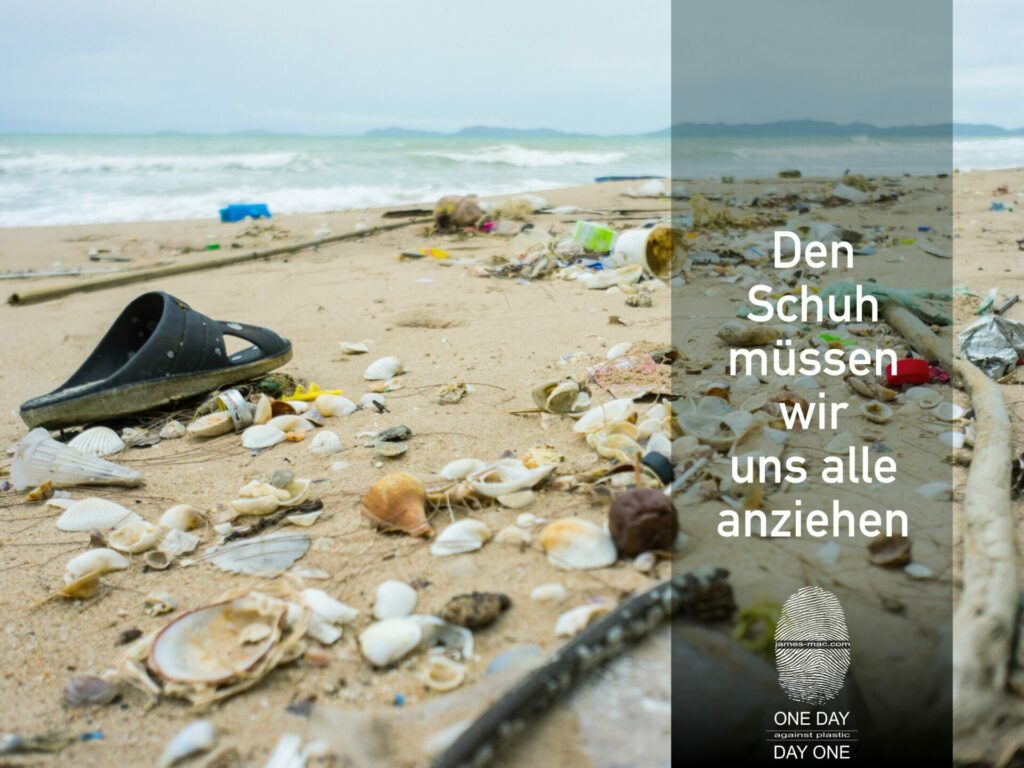
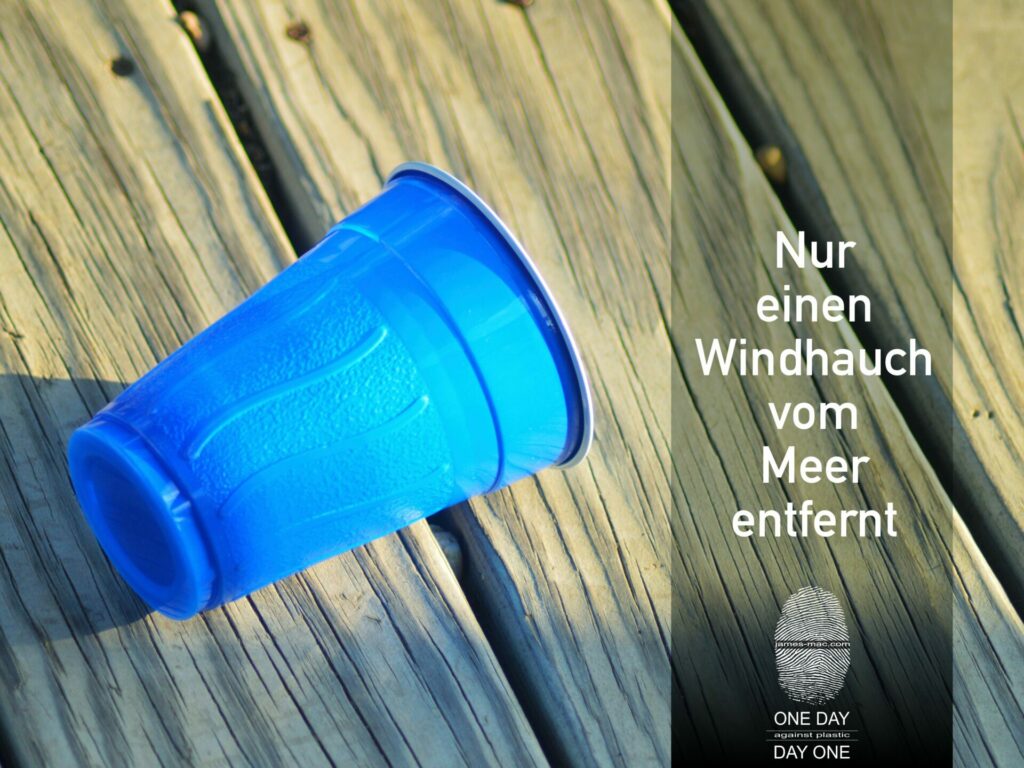
Just a breath of wind from the sea
There is far too much plastic waste floating in our oceans, but how does it actually get there? We’ve all heard reports of beached whales that have swallowed large quantities of rubbish and died as a result. Many people are also familiar with the video of a diver swimming through a sea of plastic. But how do such vast quantities of plastic waste end up in the oceans in the first place?
Rubbish finds its way into the sea in various ways. A large part of the rubbish comes from land. If rubbish is not disposed of properly in coastal holiday resorts, it can be blown into the sea. Or it reaches the sea via rivers and subsequently. In many countries, rivers and the sea are abused as rubbish dumps and waste is disposed of directly there.
Another part comes from fishing trawlers, for example. Equipment is often lost there, or damaged and old gear is simply thrown overboard. This includes nets, ropes and transport crates. Forty per cent of the world's largest garbage patch, which is four times the size of Germany, consists of this waste.
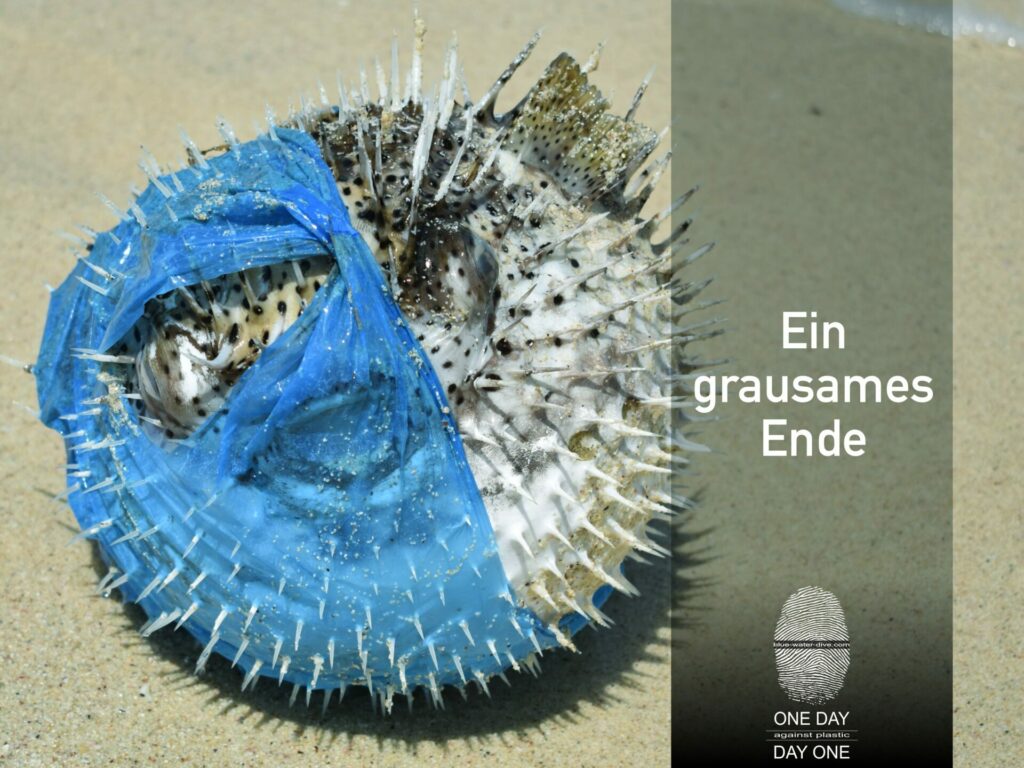
A grisly end
This fish photo breaks your heart!
There is probably hardly a sadder photo of a porcupinefish! Porcupinefish erect their spines when in danger and try to deter attackers in this way.
Yet against the deadly trap of the plastic bag, the fish had no chance. What can we do? Quite simply: please no longer use plastic bags, as much as possible!

Unknown sender
Is the sender really unknown? We probably all know exactly who such products come from. Just like the rest of the rubbish floating in our oceans, there is actually only one sender – we humans.
Huge garbage patches have now formed in the oceans. A particularly large amount of plastic waste floats between Hawaii and California in the so-called „Great Pacific Garbage Patch“, which is considered the world's largest garbage patch. This covers an area of 1.6 million square kilometres, which corresponds to an area more than roughly 4.5 times the size of Germany.
It should therefore be said as quickly as possible: Return to sender or straight into the bin!
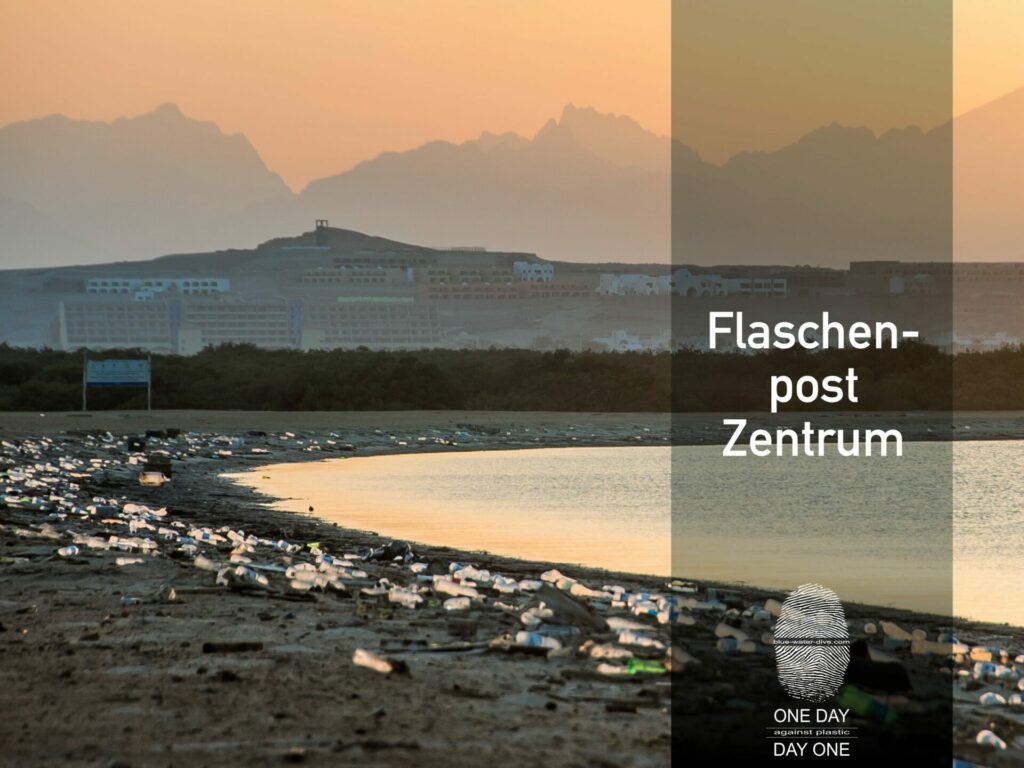
Flaschenpost Hub
Plastic again? Nobody wants to see a holiday postcard like that – plastic waste as far as the eye can see! With many small steps, we can all do our bit.
Nobody is the perfect environmentalist, but if everyone does a little bit to avoid plastic, then perhaps we won't have to see such images in the future.
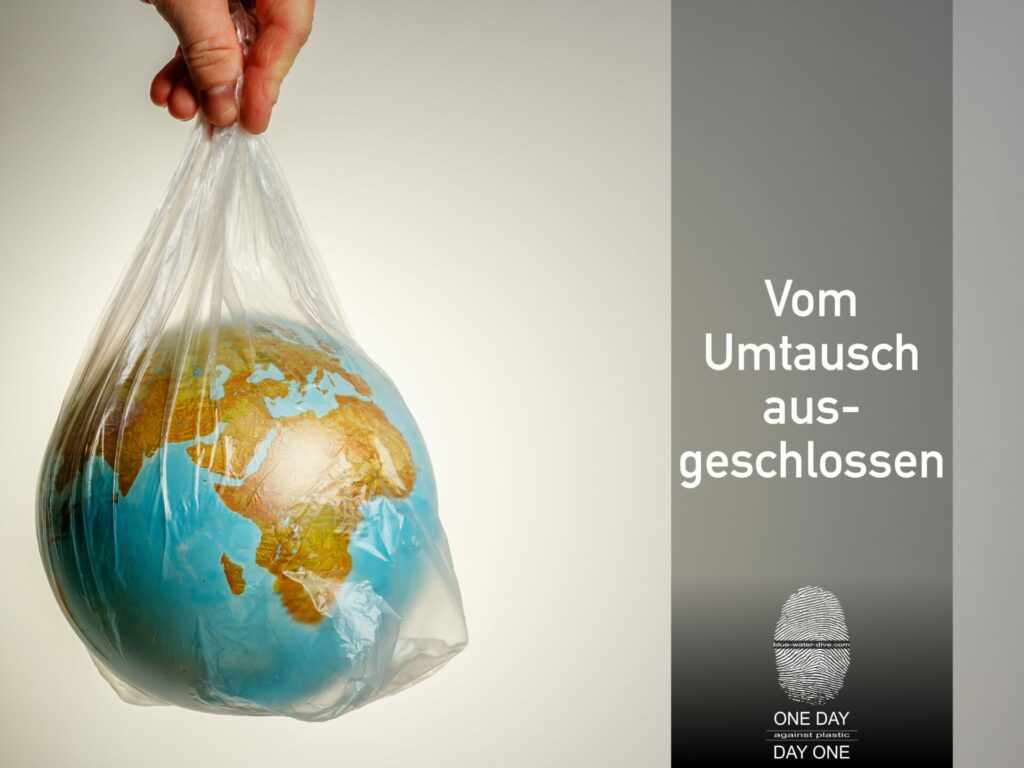
Non-returnable
Definitely not possible, GUARANTEED.
We cannot exchange our Earth. We must save the Earth, because otherwise we cannot save ourselves. We do not have a second Earth on the shelf, so we must act now.
Our Earth is GUARANTEED to be non-returnable!
Humanity as far as the eye can see
We have an alternative to the melting of the polar ice caps. How about melting the mountains of waste?! Achieving this goal is not so easy to implement, at least for Germany.
Because in Germany the amount of so-called municipal waste (waste from private households and similar institutions) rose by almost 11 percent, while it fell by an average of 4 percent across the European Union. But why is the mountain of rubbish in Germany getting higher and higher?
One reason is obvious: more household waste is an indicator of prosperity. Because when the economy is doing well, more is consumed and as a result we generate more waste.

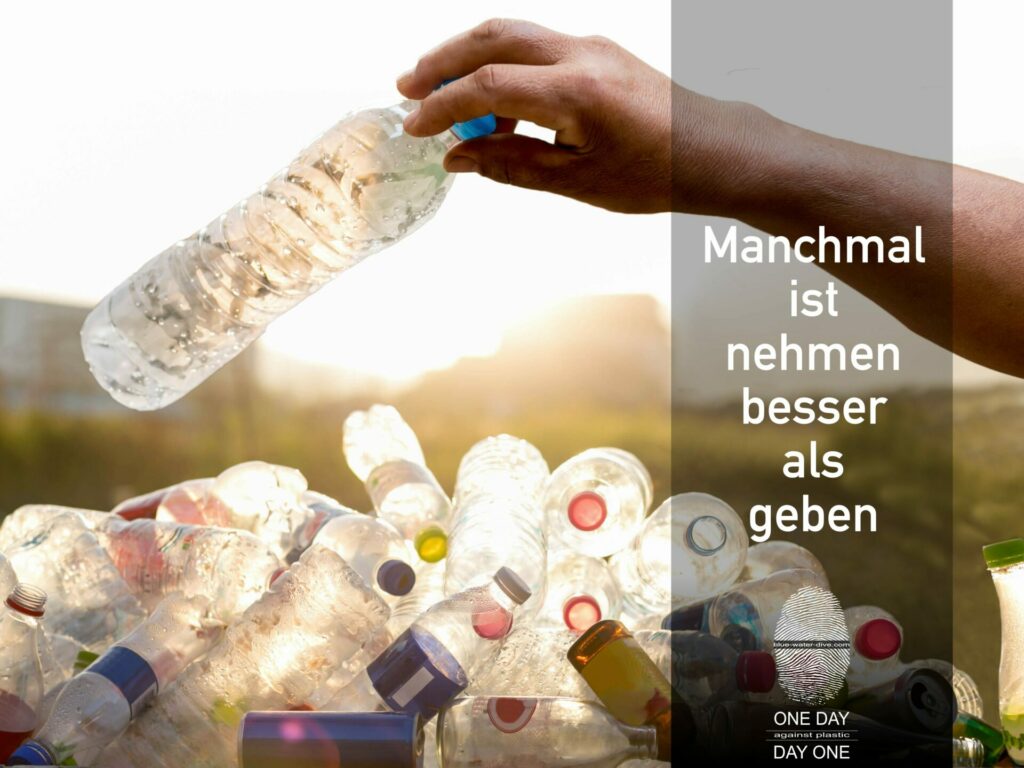
Sometimes taking is better than giving
A day at the beach is occasionally a lovely thing. We know of a meaningful souvenir: litter! Do you know that feeling too? You are at a romantic bay or on a beautiful beach and then the rubbish practically catches your eye. Our tip: alongside a cool bag and beach shelter, a bin bag or collection net should definitely be part of your beach gear.
For a litter pick is not only good for the eyes, but also good for the soul. After all, the beach doesn't just look better afterwards – you simply feel better too! By the way, of course this doesn't just work on the beach!
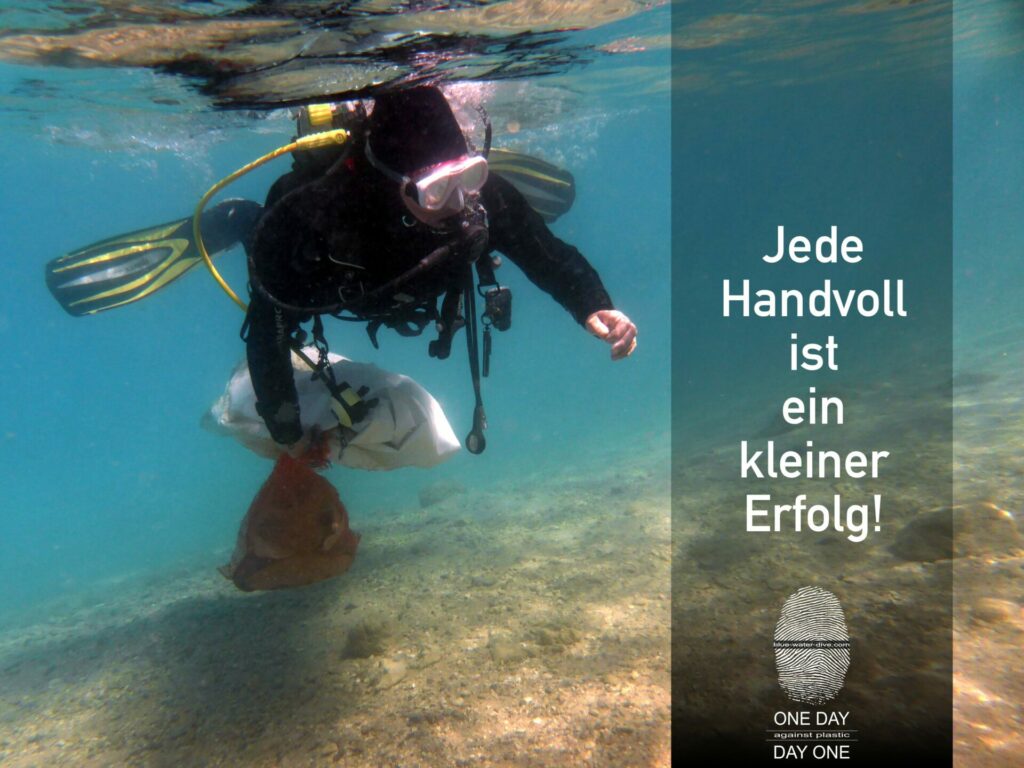
Every handful is a small success!
Just grab whatever you see while diving – what is otherwise forbidden is expressly permitted here! If you see any rubbish during a dive, grab it and help make the sea a bit cleaner. Every handful is a success!
Many thanks!

Environmental protection a tightrope walk
Environmental protection is indeed a balancing act – and indeed with regard to the survival of the ecosystem, and therefore also with regard to the survival of humankind.
Living conditions on the planet are constantly changing – and not for the better. Since the beginning of industrialisation, this change has accelerated extremely. Over past centuries, parts of nature have been irretrievably destroyed. It is not only many species of animals and plants that are threatened with extinction. The entire Earth's ecosystem is at risk.
The international community has recognised the problem of environmental pollution. Yet, despite many conferences, far too little is still being done. However, every single person can do something: avoid waste, save electricity, or use public transport or the bicycle more often.
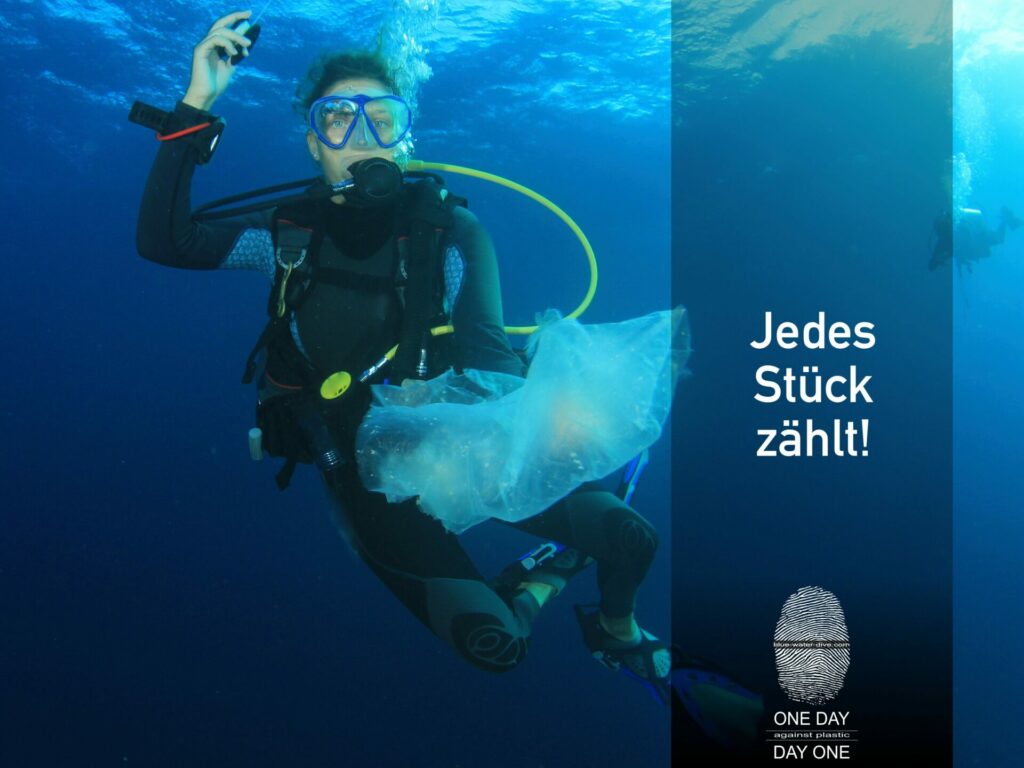
Every piece counts!
Piece by piece against the flood of plastic. Even if it doesn't seem like much, every piece of plastic counts. It is easy to feel helpless in the face of the roughly 10 million tonnes of plastic waste that end up in the sea every year. How on earth is one supposed to make a difference?
Yet with every piece of plastic you remove from the sea, you can save a seabird or a marine creature. Because that exact piece of plastic won't end up in an animal's stomach! Collecting plastic is therefore worthwhile in any case. True to the motto: Piece by piece against the tide of plastic!